Codex Mortis arrives on PC not just as another entry in the crowded bullet heaven genre, but as one of the most talked-about technical experiments on Steam: an isometric horde roguelite built almost entirely using generative AI for its code, art, and sound. Where standard survivors-likes ask you to improvise solely on the fly, Codex Mortis blends frantic top-down dodging with deliberate deckbuilding.
Developer: GROLAF
Publisher: CRUNCHFEST
Release Date: 24 September 2026
CPU: Intel Core i5 / AMD Equivalent
GPU: Geforce GTX 1060 / AMD Equivalent
RAM: 4 GB
HDD: 2 GB
Review code provided
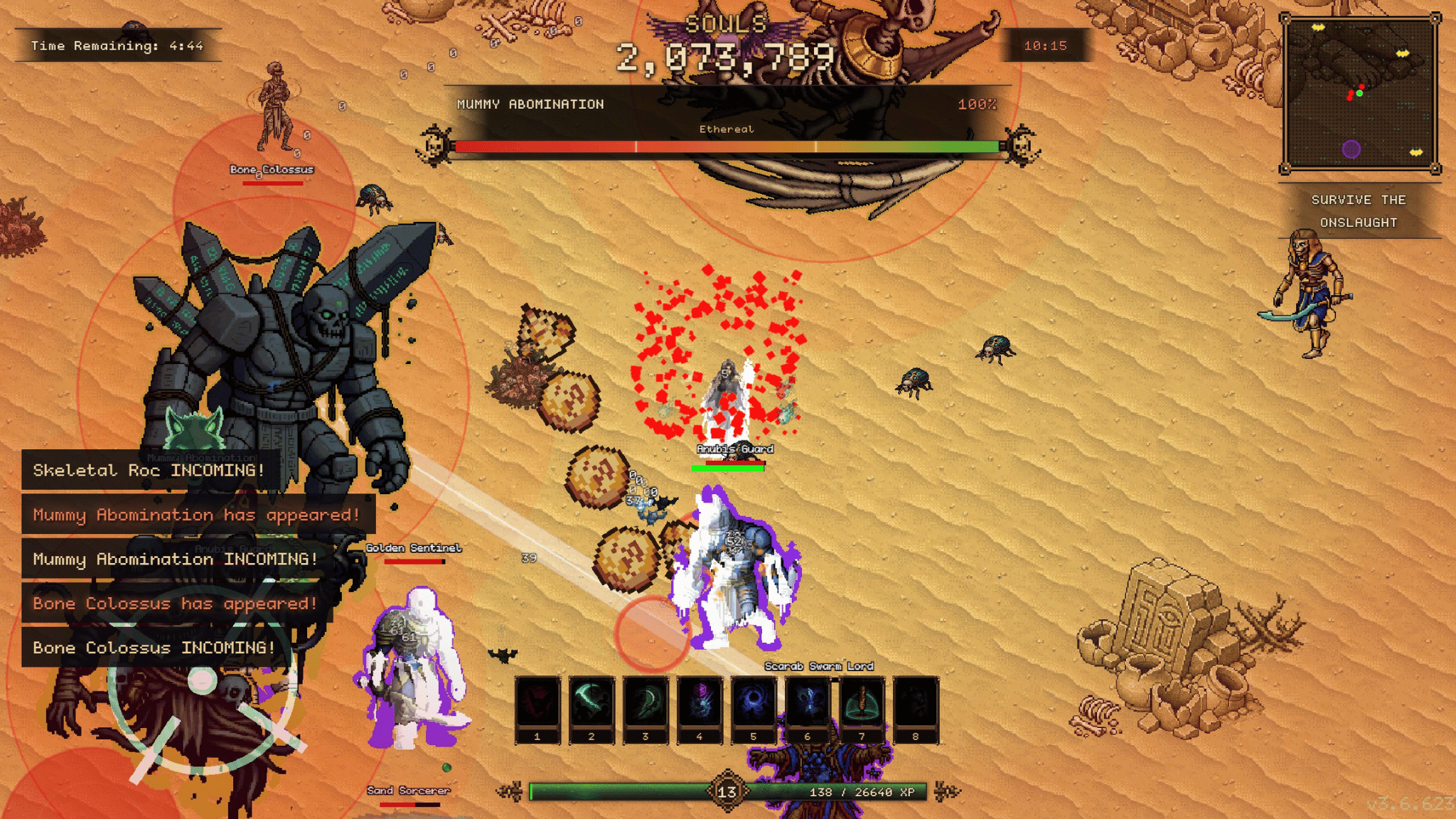
Before jumping into a run across its gothic arenas, you curate a loadout from unlocked spells across ten distinct schools of dark magic—ranging from Necromancy and Blood Magic to Harvest and Soul manipulation. The currency collected during battle goes toward purchasing digital booster packs between attempts, gradually widening your pool of offensive curses, minion summons, and defensive wards. In action, this structure provides a rewarding degree of agency.
Rather than praying for RNG to offer a cohesive kit, your pre-run theorycrafting dictates how the battlefield unfolds. Mid-run Mutations further distort your abilities, altering spell trajectories or transforming summoned undead into entirely new archetypes. Stacking synergy-heavy spells into screen-clearing feedback loops delivers the high-dopamine payoff that fans of Vampire Survivors crave.
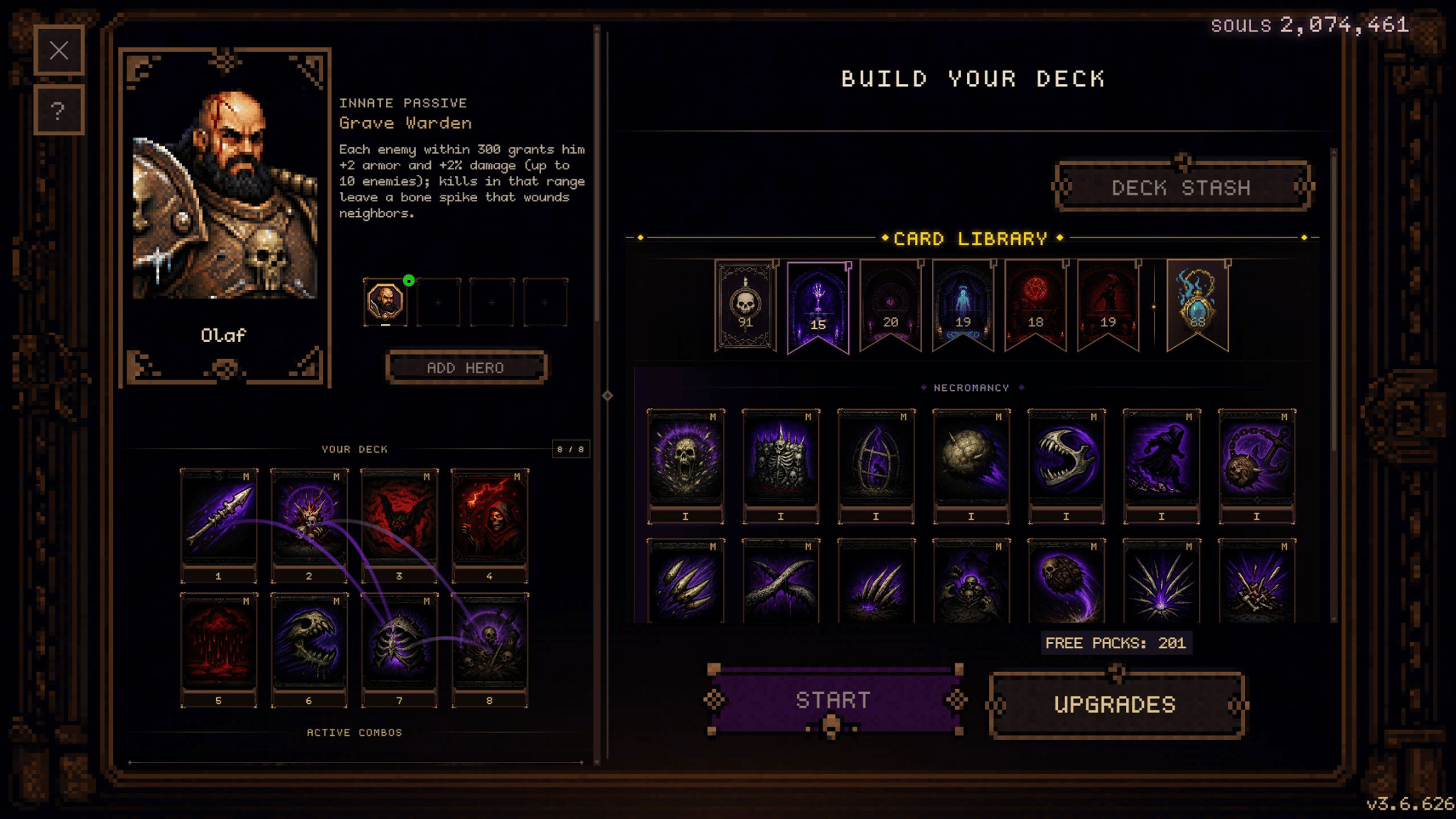
However, the game’s fully AI-generated origin is impossible to ignore, and it cuts both ways. Mechanically, the foundation is surprisingly functional and surprisingly dense, complete with local and online four-player co-op. Visually and ergonomically, it feels hollow. Sprites frequently resemble static, cut-out illustrations that wobble awkwardly across the floor without genuine walk cycles or attack frames.
Visual readability suffers under layers of muddy dark fantasy particle effects, making critical enemy tells tough to distinguish during late-wave chaos. The user interface is similarly clunky, burdened by obtrusive nested menus and odd navigation logic that make sorting your deck more of a chore than it should be. The AI-composed dark ambient soundtrack does the job atmospherically, but it lacks memorable hooks.
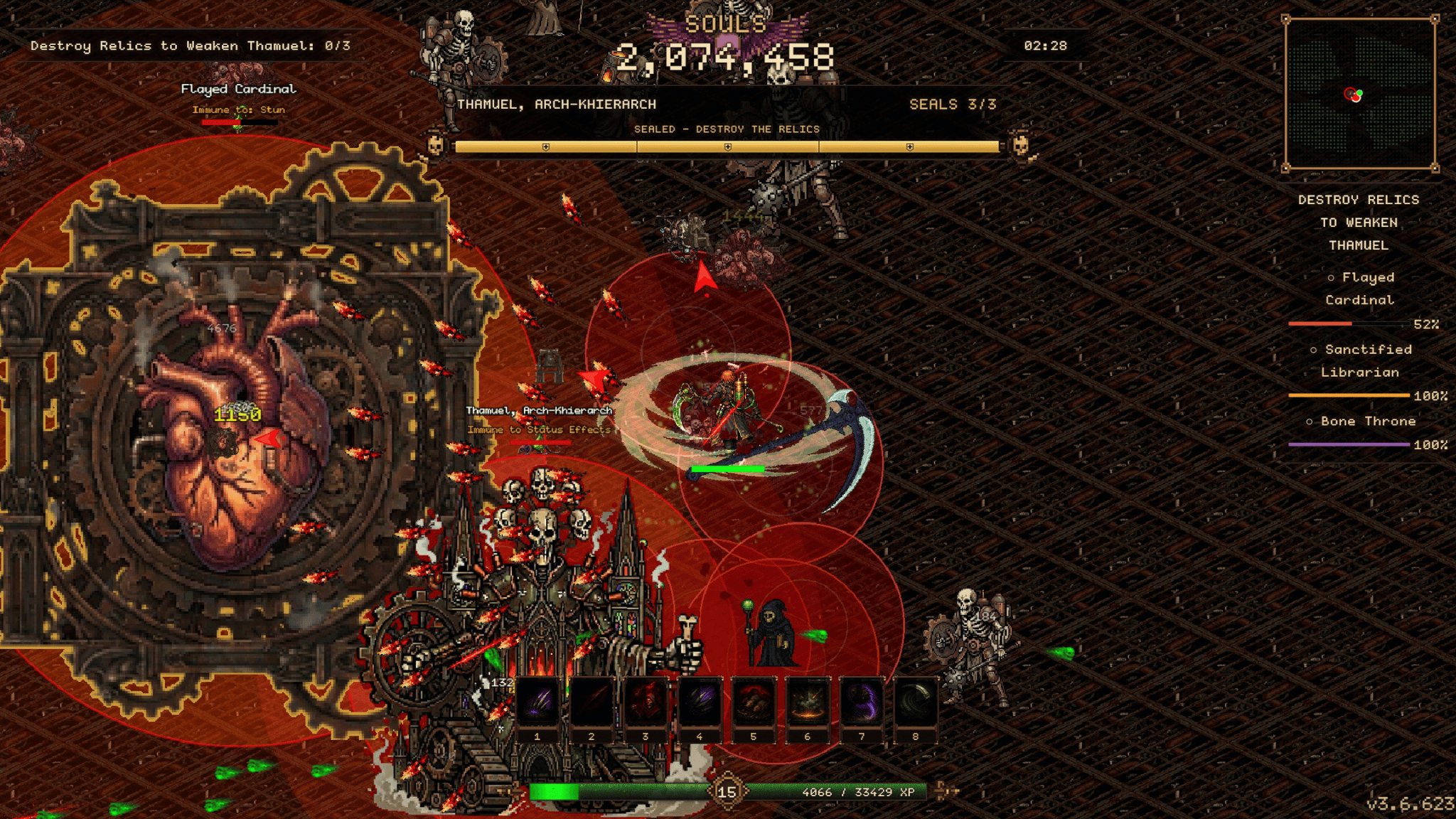
Balance can also tilt toward the extremes. Certain minion-heavy summon builds trivialize early-to-mid level encounters by flooding the screen with autonomous meat shields, turning active survival into passive idling until bullet-sponge boss encounters suddenly demand sudden repositioning.
Final Thoughts
Codex Mortis is an intriguing proof-of-concept that undeniably achieves what it sets out to do mechanically, yet it cannot entirely mask the sterile, disjointed seams of its algorithmic construction.