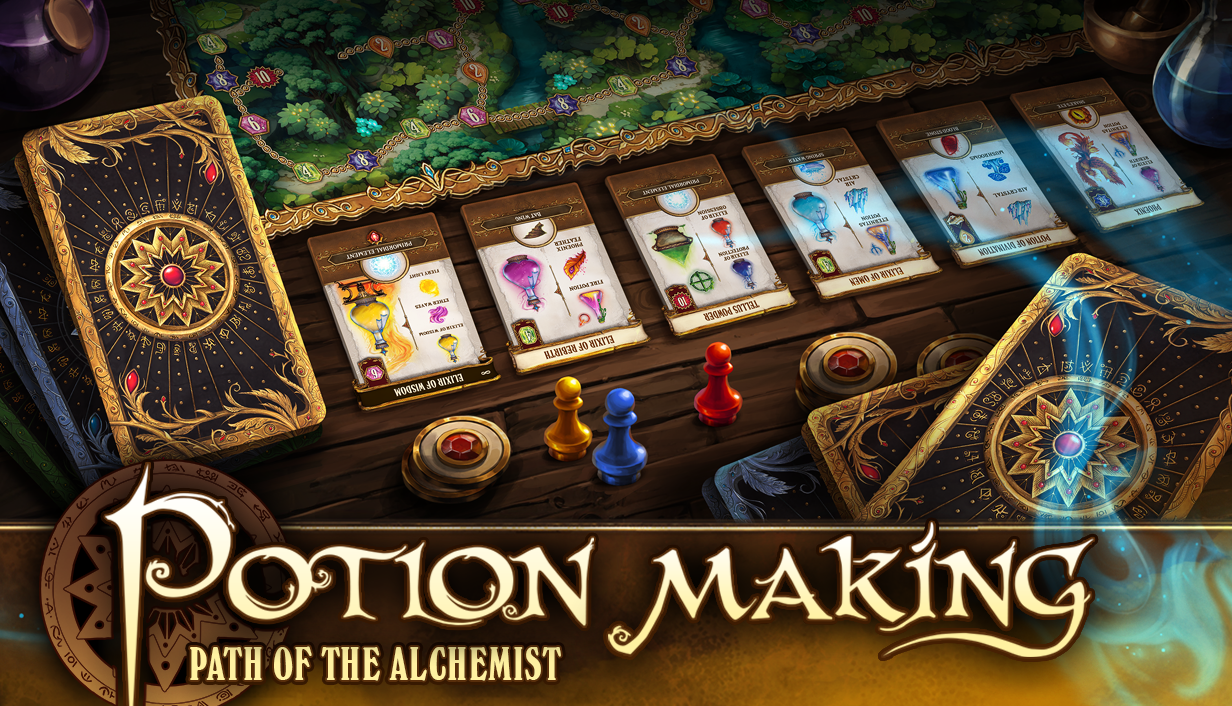
Potion-making: Path of the Alchemist brings the beloved 2005 tabletop classic by Sergey Machin into modern digital form, delivering a competitive recipe-chaining strategy game on PC. Rather than focusing on physical stirring or shop simulation, this adaptation transforms card-driven alchemical drafting into a clean race across magical boards to claim three Places of Power.
Developer: Oduvan Games
Publisher: Beverlor
Release Date: 10 November 2026
CPU: Intel Core i5 / AMD Equivalent
GPU: Geforce GTX 1060 / AMD Equivalent
RAM: 4 GB
HDD: 1 GB
Review code provided
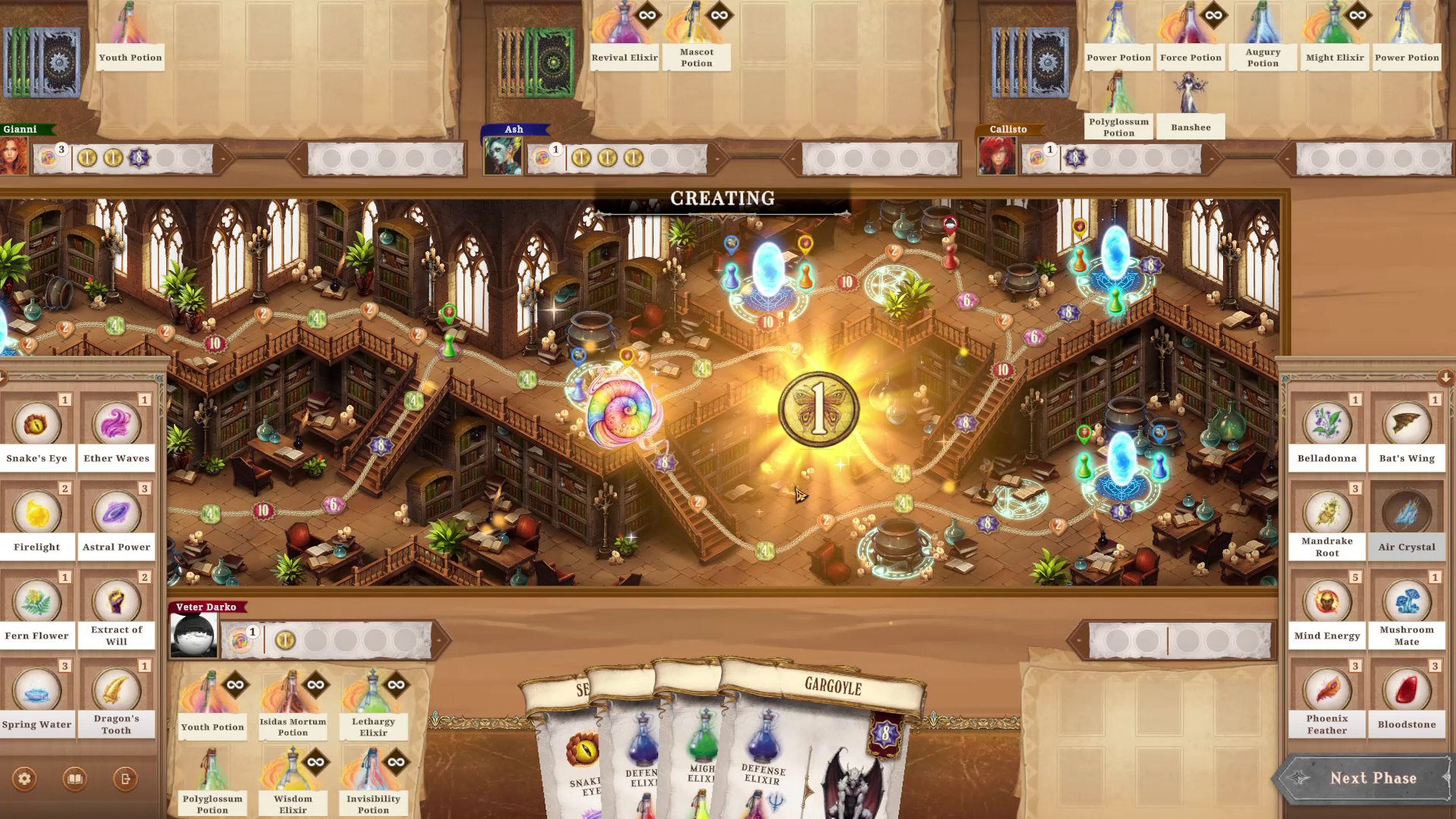
The core loop revolves around an elegant, shared-economy crafting puzzle. Every card in your hand serves a dual purpose: it can be spent as a raw reagent added to a central pool, or crafted into an elixir if the required components already exist on the table. Once brewed, complex concoctions serve as ingredients for even higher-tier magical items.
The digital transition shines here by automating the tedious bookkeeping, card tracking, and reagent counting of the physical game, allowing matches to flow briskly. The board race dynamic—where concocting stronger potions grants movement tokens across diverse terrain—adds welcome friction and direct player interaction.

Visually, the game opts for stylized storybook presentation across diverse environments, from ancient libraries to frozen wastes. While the artwork is clean, certain UI elements feel slightly stark, and the procedural UI menus carry an indie stiffness that lacks the tactile flair of physical cardboard.
The inclusion of solo AI matches alongside online multiplayer ensures solid replayability, though the baseline AI occasionally relies on predictable drafting patterns that seasoned strategists will easily exploit. Additionally, the reliance on card draw RNG means bad deck cycles can stall your board progression regardless of your planning.
Final Thoughts
Despite minor balance and UI quirks, it succeeds as an engaging, brain-teasing digital tabletop adaptation that captures the competitive essence of its source material without the physical table clutter.