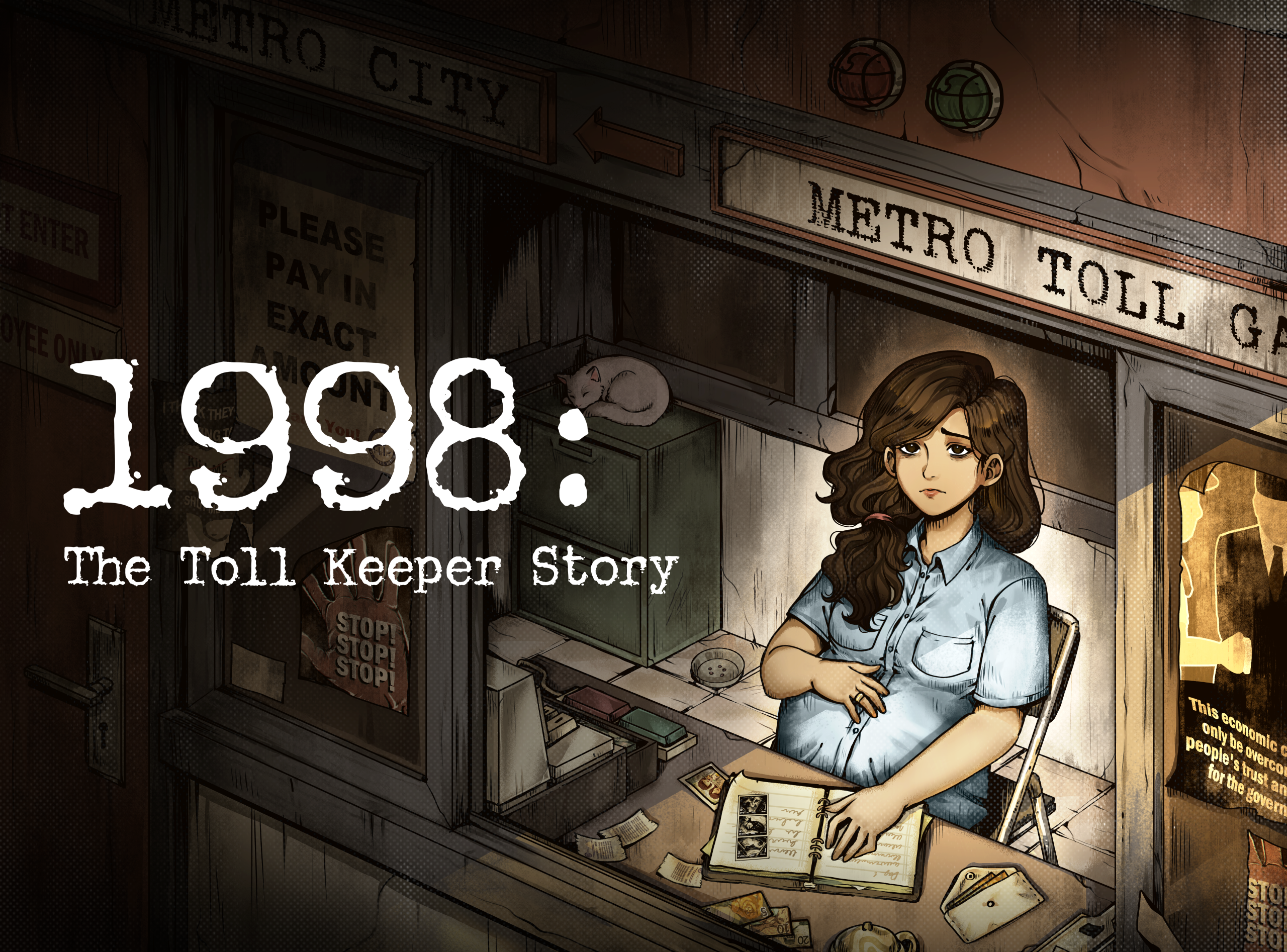
Set in the eerie isolation of a lonely toll booth, 1998: The Toll Keeper Story on PC blends psychological horror with narrative-driven exploration. Players assume the role of a night-shift toll keeper unraveling cryptic events, unsettling visitors, and a dark mystery lurking just beyond the headlights. Every choice deepens suspense and shapes the chilling story ahead.
Developer: GameChanger Studio
Publisher: GameChanger Studio
Release Date: 28 October 2025
CPU: Intel Core i5 / AMD Equivalent
GPU: Geforce GTX 1060 / AMD Equivalent
RAM: 8 GB
HDD: 5 GB
Review code provided.
Narrative & Setting
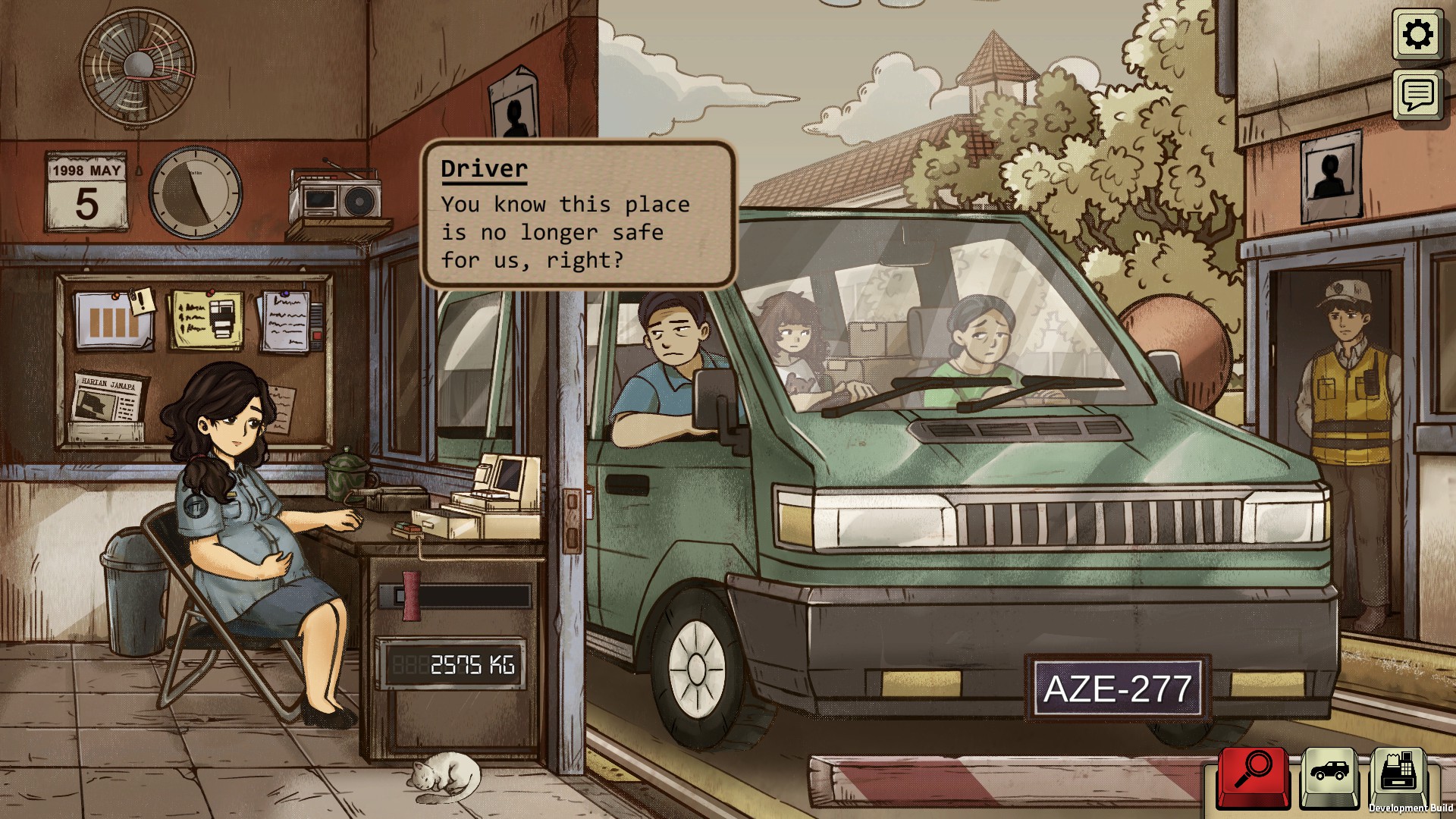
The game places you in the shoes of Dewi, a pregnant toll-booth worker in the fictional Southeast Asian country of Janapa, during a period of escalating civil unrest and economic collapse. The inspiration is drawn from the real-life turmoil of the 1998 Asian financial crisis, especially in Indonesia, yet the developers make clear the story is fictionalised.
From the outset you’re confronted with a world that’s unravelling: toll-booth shifts turn from routine checks to moral battlegrounds, as protests, rising prices, and governmental directives pile up.
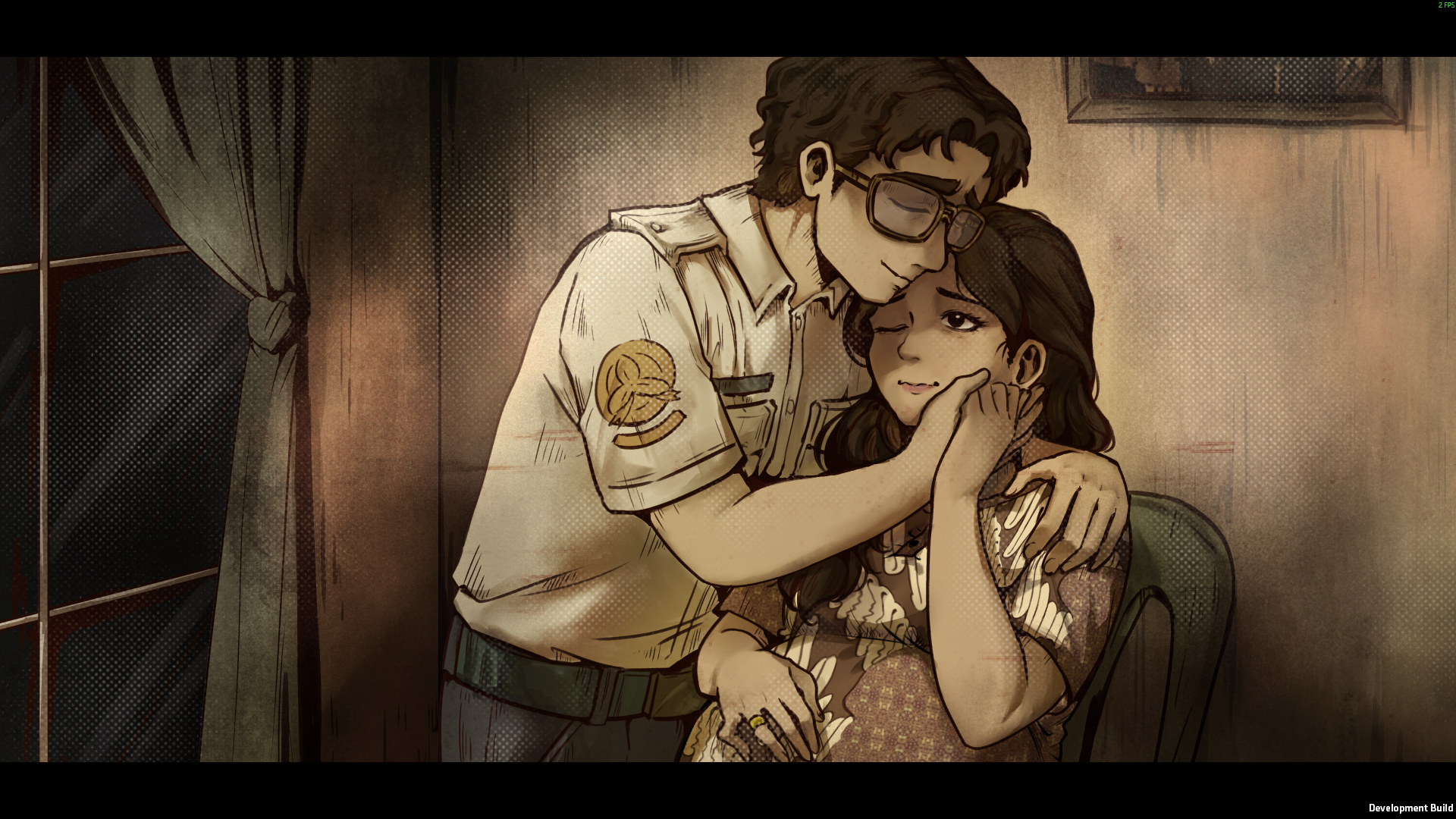
Through Dewi’s viewpoint we see the personal cost of major societal upheaval: her unborn child, her husband’s involvement, her job that holds the thin line between order and chaos. The narrative strength lies in its intimate scale: you’re not commanding armies, you’re verifying documents, deciding who passes through a gate, trying to keep your life together as the world collapses around you.
The shifts in tone — from mundane to dire — are executed well, making every seemingly small decision carry weight. The story earns its emotional resonance. It is quiet, measured, and steeped in uncertainty rather than action or spectacle. If you like games that make you reflect, and sit with discomfort, then it succeeds.
Gameplay & Mechanics
On the surface, the gameplay loop is simple: inspect vehicles, verify documents, collect tolls, abide (or not) by ever changing rules. However, that simplicity is part of the power: small actions accumulate, and the pressure increases as new obligations are introduced. The game smartly channels a papers-please vibe, but repurposed for moral and emotional weight rather than bureaucracy for its own sake.
For example, you may decide whether to let someone through who cannot pay, or you may cover their toll from your limited funds — knowing that every lapse might trigger consequences for you. The game shifts from being a management simulation into a reflection on duty, survival, and conscience. The game also introduces rules that evolve: odd/even plate restrictions, expired documents, heavier vehicles, protests nearby — each adds tension.
That said, the gameplay is not long or sprawling: it’s structured across a set number of days (15 in one review) and ends when the narrative runs its course. Because of that, replay-value may be limited: after mechanical familiarity, the novelty wanes.
Visual & Audio Design
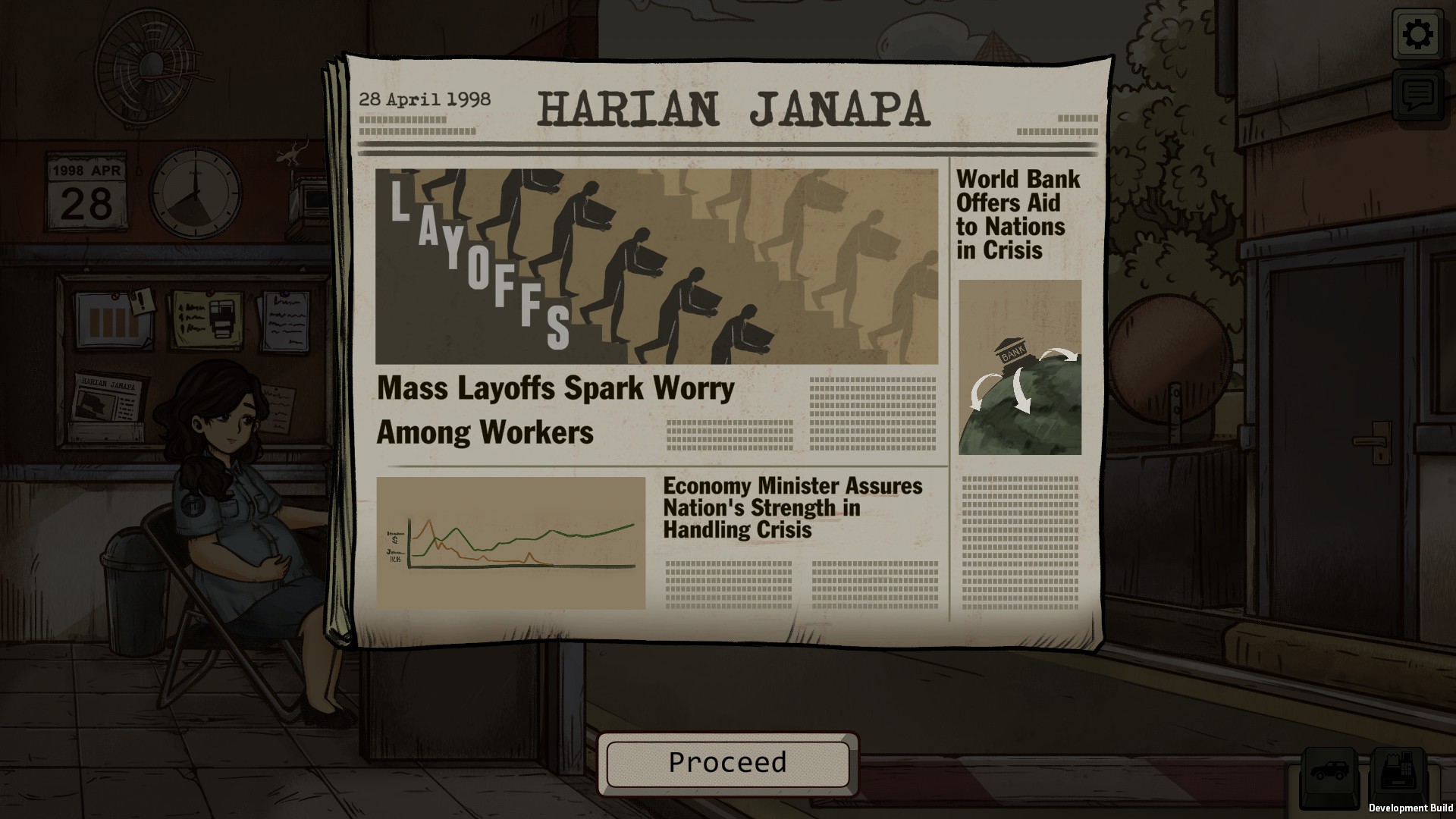
Visually, the game has a strong, grounded style: muted colours, textured paper-like aesthetics, and a late-90s filter that adds to the period tone. One review praises the “old-paper aesthetic” and deliberate line-work. The character art is expressive without being exaggerated, the world feels lived-in but tense.
On the audio side: ambient sounds (cars, distant protests, toll-booth machinery) build atmosphere rather than heavy orchestral cues, which suits the narrative. Together, the audio-visual package delivers a cohesive mood of dread, quiet endurance and moral weight.
Final Thoughts
1998: The Toll Keeper Story is not a game about heroic uprising or grand spectacle — it’s about endurance, moral weight, and quiet survival. If you’re drawn to games that make you pause, feel, and reflect, this one will linger with you.